
The live component of the ASE Facilitator training consists of six full days of in-person training, followed by six 90-minute training/supervision sessions via Zoom and at least two 90-minute ‘fireside conversations’ with professional practitioners (via Zoom). Estimated hours of live training: 60
The self-study component consists of tutorial videos, audio recordings and reading, as well as practicing the ASE skills, reflection and completing the certification assignments. Estimated hours of self-study: 80-120
No previous experience is necessary to join us on this transformative learning journey. However, if you are already involved in leadership, coaching, therapy, counselling, teaching, training and other helping or developmental professions; the ASE Facilitator training will raise your level of competency and add tremendous value to your overall expertise.
The resources that you are provided with upon enrolment serve as a solid introduction to the ASE theory, principles and techniques.
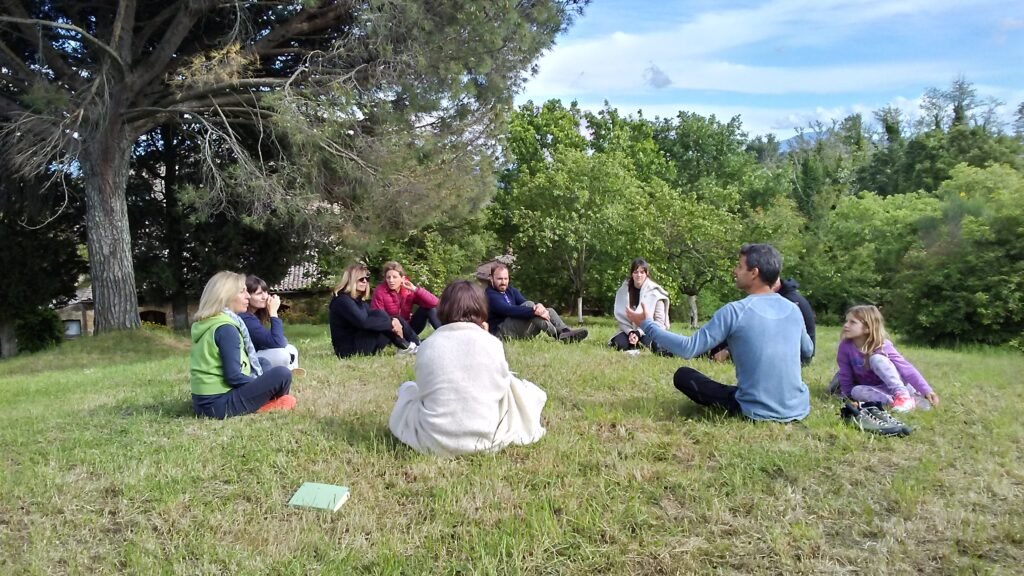
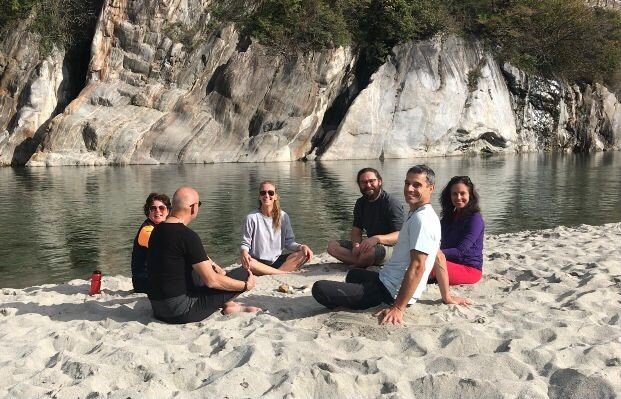
Yes! There are many exercises, demonstrations, practice sessions, group activities and discussions. Experiencing and discovering how to facilitate Open Awareness occurs throughout the training. The 6-day in-person training is followed by 6 live group training and supervision sessions via Zoom – one session per month for 6 months, along with additional ‘fireside conversations’ with professionals in the field (details here). By the end of this 6-month learning journey, you will be confident and competent at applying all the core ASE techniques.
Yes! There are many exercises in pairs and in groups where you have the opportunity to present real life challenges as a client. There is no role playing, we keep it real and relevant!
The ASE Facilitator training is all about the applied domain – for practitioners and healers to gain practical skills. It is not an academic course.
The content of the training includes:
- The Principles of ASE put to practice.
- The role of mindfulness, self-hypnosis, NLP & Transpersonal Psychology in ASE.
- Applied Open Awareness – the fundamental ASE skillset.
- ASE methods to resolve stress, anxiety and fear.
- ASE approaches to help prevent and recover from burnout.
- Gentle healing techniques to address the root causes and symptoms of trauma.
- ASE Past Resourcing – regression techniques to heal the underlying causes of limiting beliefs and unwanted emotional reactions.
- ASE Future Resourcing – progression techniques to connect with potential future awareness and resources in order to become empowered in the present.
- ASE Relationship Resourcing – how to become more empowered and resourceful in all relationships based on the establishment of broader understandings and compassion.
- Perceptual Positions – how to achieve and integrate multiple points of view.
- The Transpersonal Coaching Model
- Learn how to facilitate the ASE Integrative Coaching Program
- The ASE Integral Practice – physical, mental, emotional, interpersonal, spiritual – practices to integrate ASE into your whole life.
- Approaches for working with children and teenagers.
- Daily jumi (judo mind) sessions.
- How to use the Nature’s Way Process in various settings
- And many mind expanding experiences during the plentiful demonstrations, , supervised practice sessions, group exercises and sharing circles.
Yes! The ASE methodology is trauma informed and you will learn not only how to identify the markers of trauma, but also how to approach trauma sensitively and constructively when it presents.
In regard to trauma healing, ASE draws from the work of Maté (2022), Schwartz (Internal Family Systems, E.G., 2021), Hübl (2020), Dana (2020), Vaughan Smith (2019), Siegel (2018), Van der Kolk (2015), Levine (Somatic Experiencing, e.g. 2008), as well as knowledge from healing practices in the field of transpersonal psychology, such as psychosynthesis (Firman, 2018) and related approaches described in The Wiley-Blackwell Handbook of Transpersonal Psychology (Friedman & Hartelius 2013), including applied mindfulness, breathwork and psychedelic assisted therapies.
Since our unique form of facilitating is applicable in both coaching and therapy, utilizing transpersonal states and perspectives, ASE processes frequently enter the grey zone – where therapy and coaching intersect. ASE Facilitators are trained to hold this liminal space with care, compassion and open awareness. In so doing, the root causes of clients’ issues may be unveiled, including deep wounds and trauma, if that exists for the client.
Traditional forms of coaching steer away from confronting those underlying issues, sometimes leaving the client feeling fragmented and confused, but we in transpersonal coaching recognize that these phenomena cannot be ignored and that it’s not always appropriate for the coach to immediately refer a client to a therapist that the client is not familiar with, when they have entrusted the coach to help them. In these cases, compassionate support and guidance for integration are crucial, and this is one of the hallmarks of our transpersonal coaching approach.
Transpersonal coaches also know their limits in terms of professional expertise and they are able to identify if the client should be referred for more clinical care.
References:
Dana, D. (2020). Polyvagal Exercises for Safety and Connection: 50 Client-Centered Practices. W. W. Norton & Company
Firman, D. (ed), (2018). The Call of Self: Psychosynthesis Life Coaching. Lightning Source Inc.
Friedman, H. & Hartelius, G. (eds), (2013). The Wiley-Blackwell Handbook of Transpersonal Psychology, First Edition. John Wiley & Sons, Ltd.
Hübl, T. (2020). Healing Collective Trauma: A Process for Integrating Our Intergenerational and Cultural Wounds. Sounds True.
Levine, P. (2008). Healing Trauma: A Pioneering Program for Restoring the Wisdom of Your Body. Sounds True.
Maté, G. (2022). The Myth of Normal: Trauma, Illness, and Healing in a Toxic Culture. Avery.
Schwartz, R. (2021). No Bad Parts: Healing Trauma and Restoring Wholeness with the Internal Family Systems Model. Sounds True.
Siegel, D. (2018). Aware: The Science and Practice of Presence. A Complete Guide to the Groundbreaking Wheel of Awareness Meditation Practice. Tarcher Perigee.
Van Der Kolk, B. (2015). The Body Keeps the Score. Penguin Random House.
Vaughan Smith, J. (2019). Coaching and Trauma. Open University Press.
The ASE methodology is pragmatic and versatile. It does not include any concepts or processes that are too far out for any individuals to follow and make sense of. For clients who are spiritually inclined, ASE can meet them where they are and help them to go further or to embody their spiritual experiences more fully, depending on the client’s desired outcome and their unfolding process. The ASE methodology is inherently client-and-process centred. It fits as well in the executive boardroom as it does in all coaching or therapy contexts, and can be facilitated via phone or online media.
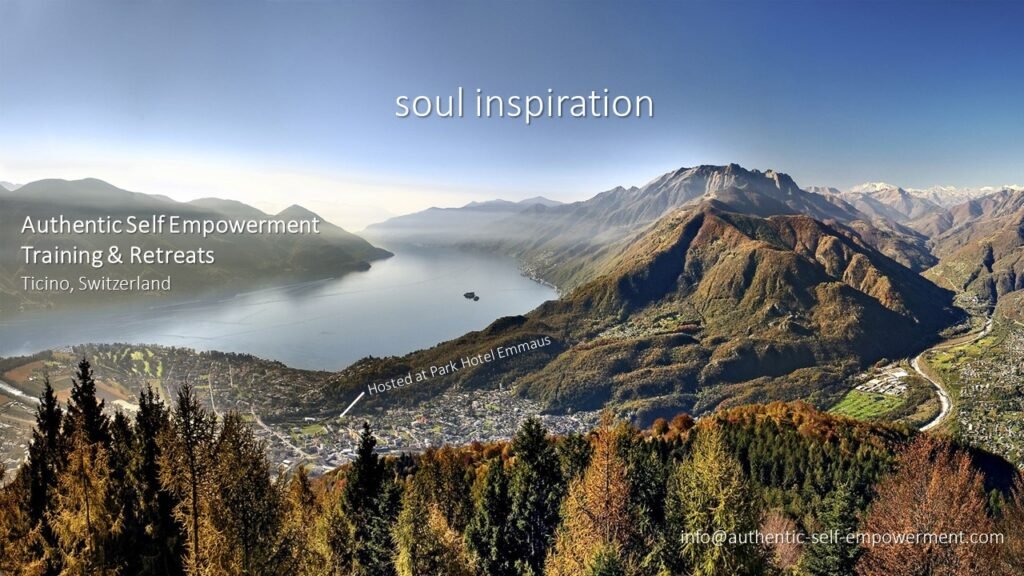
The in-person component takes place annually in London and in the Italian part of Switzerland (near Locarno at lake Maggiore) as well as on demand in any location worldwide.
 Jevon Dangeli, MSc is a co-developer of the ASE approach. He is a certified NLP Trainer, Transpersonal Coach and Hypnotherapy Practitioner who has provided live training in these areas since 2002. He gained his MSc in Consciousness, Spirituality and Transpersonal Psychology from Middlesex University. Jevon is the Transpersonal Coaching Psychology course leader at Alef Trust, Editor of the Transpersonal Coaching Psychology Journal and developer of the “Jumi” (judo mind) practice. He has written nine training manuals and recorded over 30 audio-programmes, as well as a comprehensive video series where he teaches psychological methods for personal and professional development. He is also the co-founder of the Live Foundation, a non-profit whose mission is to create opportunities for positive change by providing free education and empowering resources to those who contribute their time and energy to humanitarian aid or environmental sustainability.
Dr Hennie Geldenhuys is a medical doctor, certified ASE Trainer, Transpersonal Coach and Hypnotherapist. He integrates his medical, scientific and clinical research skills with the Authentic Self-Empowerment (ASE) and Open Awareness (OA) approach. He applies this unique blend of disciplines in his work with individual clients and in dynamic group training courses. He has a passion for change work, for the link between the evidence, practice and experience in coaching, and the link between the biological, the psychology, the spiritual and the transpersonal.
By completing this 6-month training and fulfilling the certification criteria, you will obtain the Authentic Self Empowerment (ASE) Facilitator Certificate.
By completing this training a second time (half price), you will obtain the Advanced ASE Facilitator Certificate.
There is also the possibility of continuing this learning journey and becoming a Certified ASE Trainer.
- Completion of the in-person ASE Facilitator training
- Attendance of the 6 post-course group supervision sessions, or listening to the recordings
- Ability to demonstrate all core ASE Facilitator skills effectively
- ASE Facilitator manual and Open Awareness handbook have been read
- Provide answers to the set of questions that appear below all 44 training videos
- Confirm that you have watched the recordings of all ASE ‘fireside conversations’
- Submit a document describing how you (will) apply the 13 ASE Principles in your profession (500 words max)
- A minimum of 2 substantial posts made in the TCTN Forum
- Signed IACTM Code of Ethics form
Yes! Following the training, you will have the opportunity to continue with monthly training/supervision sessions via Zoom, as well as have access to a wide range of professional development resources (details here).
The ASE Facilitator training is a stand-alone certification course, as well as the first module of our Transpersonal Coach certification course and our Transpersonal Hypnotherapy Practitioner certification course.
For the ASE Facilitator training in London, submit this enrollment form.
For the ASE Facilitator training/retreat in Switzerland, submit this enrollment form.
For other locations or more information, please contact us here.
For the ASE Facilitator training in London fee, please see here.
For the ASE Facilitator training/retreat in Switzerland fee, please see here.
For more information, please contact us here.
Clare Cullen (UK)
Highlights were experiencing Jumi Tree breathing. I really loved the Nature cards and thought they provoked rich and thoughtful reflections.
I experienced more deeply the art of holding space and to feel held. Without words but instead listening, observing and feeling is a powerful place to heal. I have taken both personal and professional lessons from the week we had together, but most importantly I know that it all begins and ends with me. If I practice awareness and by managing my own state, then I can be happy in my home life and at work.
Tony Langford (UK)
Vinita Temmert (Germany)

The shifts generated through this work seemed to have rippled out into the quantum field… as those whom I thought about during ASE sessions, approached me with renewed love and enthusiasm, completely unprompted and as if by magic, upon my return home from the workshop.
The ASE approach is both simple and powerful in equal measure. Jevon’s hypnotic facilitation truly enables attendees to access resources beyond that which we consciously believe to be within the realm of possibility. With the addition of JUMI sequences, further deepening the experience of mind-body-spirit integration, one felt old and un-resourceful energy shifting out of the body, making space for the download of infinite new possibilities.
ASE is a transformational journey into unknown… and I am left welcoming renewed possibilities into each and every moment.
Joanne Marsh (South Africa)
Santell May (South Africa)

I wish this ASE Facilitator Training didn´t end, it was so much fun. The ASE processes are so versatile and adaptable to so many different situations. I believe that by applying them there is no client that I won´t be able to help. I am very happy with this course.
Francois Coetzee (South Africa)
Renee Brand (South Africa)
The ASE Facilitator Training is absolutely fantastic. The ASE approach is a MUST HAVE skill that allows us to live authentically self empowered and be an inspiration for others – it gives life a whole new meaning.
Hennie Geldenhuys (South Africa)
The ASE Facilitator Training was delivered professionally with sensitivity and intuition. The integration of theory and experience and practice was seamless and impressive – a remarkable journey! It was life-changing. I loved every second of this course!
Stephanie Maurel (Mauritius)

Manda Patel (UK)
Shelley Whitehead (UK)

Scholastica Williams (Tanzania)

Jevon remains grounded and real at all times, which creates the best environment for learning. ASE is a great tool that is versatile and fluid. It is also a fool-proof modality.
Ursula Scholtz (South Africa)

Jevon’s vast knowledge and profound way of facilitating the ASE Facilitator Training is outstanding, I got much more than what I expected!
Julie DeVitto (UK)

Laura Spicer (UK)
Aimie Duggan (UK)

Sue Horsburgh (UK)
Thanks to you both (Hennie and Jevon) for this wonderful Transpersonal Coaching course, which has been fascinating and challenging in equal measure, and has certainly helped to shift my life into opening to new possibilities.
Luka Boenisch (Germany)

Sara Bains (UK)
Aurélia Mellin (Belgium)
Kelly Turner (UK)
Rachel Basset (Australia)

The Transpersonal Coaching course has given me the knowledge and confidence to facilitate powerful transformation in people’s lives. It is truly a blessing to have Jevon Dangeli as a teacher, supervisor and mentor!
Margarita Coca (Spain)
The Transpersonal Coaching course has given me a new perspective on life and the tools to be of service to others. Jevon Dangeli made himself available to his students at all times. I felt completely, positively, supported and guided.
Malin Tennent (Sweden)
Jevon`s depth and knowledge allowed for a truly authentic learning experience. The awareness and techniques I developed during the Transpersonal Coaching course bring light and growth to every encounter, enriching my life and the life of my clients in profound and meaningful ways.
Marilyn Cawley (UK)
Augusto Muench (Mexico)

Olga Ferreras-Anderson (Spain)

The Transpersonal Coaching Psychology Certificate course dramatically propelled my transformative journey, both spiritually and professionally. I will always be grateful for the vast amount of resources it put at my disposal, the thorough training, and the supportive collegial community.
Tanya Kaps (Canada)
Ahmed F. Selim (USA)
Alba Carod (Spain)
Iris Chang (Taiwan)
Vitaliy Dominichenko (Ukraine)
The TCP course was like an initiation into the world of the practical transpersonal psychology applications. I am looking forward to growing as a transpersonal coach with time and using these wonderful tools to support people in achieving authentic realization.
Jenni Capel (UK)
I valued the way in which each module was built skillfully upon each other. I appreciated the focus as we entered into peer to peer coaching, in first developing an integral practice in support of growing maturity of presence, to be able to hold space for another, and also, before fully exploring coaching models, the focus was oriented towards being fully present to the other in the co-creative coaching space. Only after experiencing and establishing rapport and the flow of a session, the structure was introduced with the lightest of touches so that the emphasis in a session moves from flow to structure in an organic client-centred way.
An integral practice has served to deepen and support an already established mindfulness practice. The course has created a core understanding of the transpersonal perspective which has served to enrich the inquiry process in mindfulness group work I do with adults and children and I’m enjoying the next steps of being in service to others in a coaching capacity.
Emily Carton (USA)
I am excited, humbled, and feel like this program has given me exactly what I have wanted to learn and create for this next chapter of my life. I am very grateful.
Adrianna Oscorima (Peru)

Yolanda Fernandez-Caliani (Spain)

Cécile Hausammann Huesler (Switzerland)
Jessica Gird (South Africa)
Estie Teale (South Africa)
I felt understood at all times, integrated and encouraged. The group was so well guided by Jevon despite the different personalities. I really learnt to believe in my abilities – thank you!